How to Extend Your Tesla's Battery Life in Malaysia: Charging Habits and Settings

The short version: set your daily charge limit according to your battery chemistry (80% for most Long Range and Performance Teslas, up to 100% for LFP Standard Range packs), charge at home on AC power as your default, and use Cabin Overheat Protection whenever your Tesla sits in direct Malaysian sun. None of this is exotic - it is exactly what Tesla's own owner's manual and support pages already tell you, just translated for Malaysian driveways, TNB bills and JMB car parks.

The 60-Second Answer: Tesla Charging Habits for Malaysia
Check your car's charging screen first - Tesla's 'Daily' bracket tells you the correct limit for your specific pack, and this changed with software updates.
Long Range and Performance variants (nickel-based NCA/NMC cells): set the daily limit to 80%, save 100% for road trips.
Standard Range variants (LFP cells): Tesla's own guidance allows charging to 100% regularly, with at least one full charge a week to recalibrate the battery meter.
Default to home AC charging overnight; treat Supercharging as a road-trip and top-up tool, not your everyday routine.
Enable Cabin Overheat Protection before parking in direct sun - Malaysia's ambient heat plus a parked car's greenhouse effect pushes cabin temperatures well past Tesla's own activation threshold.
What Malaysian Tesla Owners Are Actually Asking
Most searches behind this keyword aren't really about battery chemistry - they're a new Tesla owner worried they are already doing it wrong. The three recurring questions are: what percentage should I charge to, is Supercharging secretly ruining my battery, and what do I do when the car sits in a hot condo car park all day.
The honest answer to all three is that Tesla's engineering already handles most of the hard work - active thermal management, charge tapering above 50% state of charge, and automated cooling are built in. Your job as the owner is mostly about habits: what limit you set, how long the car sits at extremes, and whether it's plugged in while parked.
Charge Limit Settings: What Tesla Actually Recommends
Battery Chemistry | Daily Charge Limit | 100% Charging | Typical Models |
LFP (Lithium Iron Phosphate) | Up to 100% is fine for daily use | Do at least once a week to recalibrate the battery meter | Standard Range RWD Model 3 and Model Y |
NCA / NMC (nickel-based) | 80% for daily driving | Reserve for trips, depart shortly after charge completes | Long Range, Performance, Model S, Model X |
Tesla's own support documentation is explicit on the nickel-based cars: set the daily limit to 80% or lower, and use the slider's 'Trip' bracket above that only when you need the extra range. On LFP-equipped vehicles the car itself will nudge you toward 100% charging through in-app notifications, because the chemistry tolerates a full charge without the same stress nickel-based cells experience.
The software-version caveat: Tesla has changed this recommendation before - the in-car slider used to show 90% as the daily bracket on older software and was later tightened to 80% for nickel-based packs. If your car's touchscreen shows a different default than what's described here, trust the on-screen 'Daily' bracket over any article (including this one) and check for a pending update.
Supercharger vs Home Charging: The Real Difference
Supercharging is DC fast charging at rates far above what any home wallbox delivers, and that speed means more heat in the cells even with Tesla's active cooling working through the session. Independent long-term data reviewed by Electrek found that frequent Supercharging does not meaningfully accelerate degradation compared to home charging for most driving patterns, provided you're not using it as your only charging method for years on end.
Charging Method | Typical Rate | Cost for a ~55kWh Top-Up* | Best Use Case |
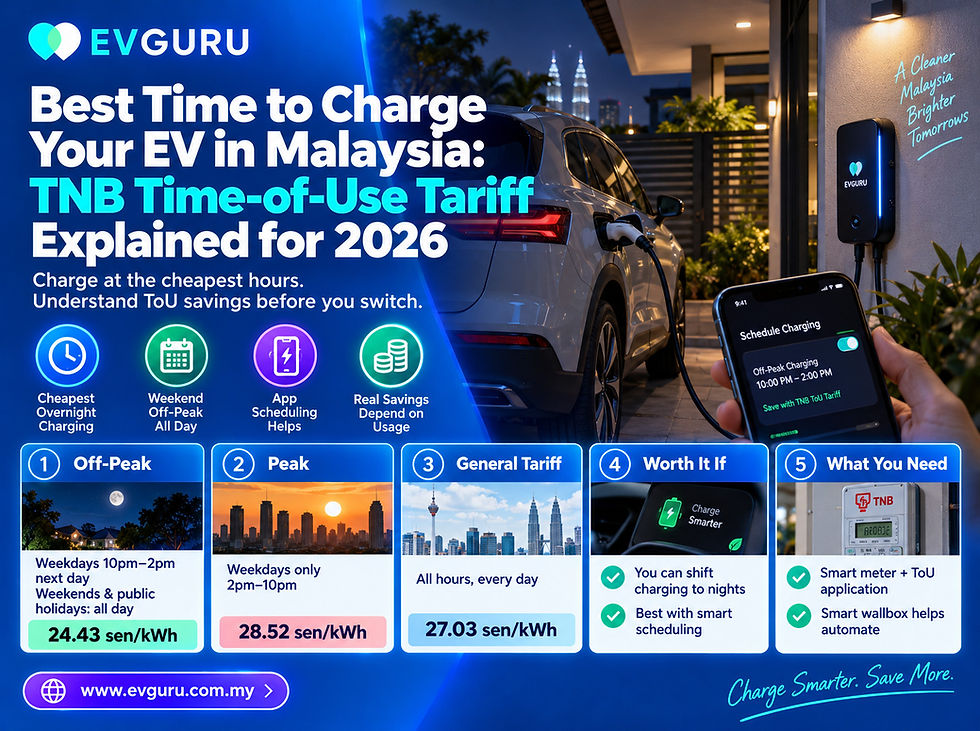
Home wallbox (7.4kW-22kW AC) | TNB domestic tariff, approx. RM0.4443/kWh before AFA for usage up to 1,500kWh/month | Approx. RM24.40 | Daily overnight charging, lowest cost, lowest thermal stress |
Tesla Supercharger (DC) | Varies by site and time, priced per session in the Tesla app | Several times the home rate - check the app for your location | Road trips and occasional top-ups, not daily use |
*Assumes a 55kWh top-up (roughly 20% to 80% on a mid-size pack) and the TNB RP4 domestic tariff structure effective since July 2025, before AFA fuel-cost adjustments and other riders that change monthly. Your actual bill will vary with total monthly household usage.
The practical takeaway for Malaysia: a home wallbox charges overnight while TNB tariffs are already locked in, costs a fraction of DC fast charging, and puts far less thermal stress on the pack than repeated fast charging. Supercharging stays useful for the Butterworth-to-Johor Bahru trip, not the Monday-to-Friday commute.
Cabin Overheat Protection and Parking in Malaysian Heat
Tesla's Cabin Overheat Protection activates once interior temperature passes a default threshold of around 40°C (104-105°F), running either the fan alone or full air conditioning to bring it back down, per Tesla's own owner's manual. In Malaysia's climate, a car parked in direct sun without shade can exceed that threshold within minutes, making this one setting worth leaving on by default rather than something you remember after the fact.
Critically, Tesla's owner's manual advises leaving the vehicle plugged in when using Preconditioning or Cabin Overheat Protection, because this draws from the charging system rather than draining the battery pack itself. That's a direct argument for a dedicated home charger over relying on public charging alone - a car sitting on your own wallbox at home can run overheat protection without eating into your range for tomorrow's drive.
Park under cover or shade whenever possible - covered car porches and basement JMB car parks reduce the load Cabin Overheat Protection has to fight.
Leave the car plugged in at home when parked for extended periods in heat, so climate functions draw grid power instead of battery charge.
Use Dog Mode or Camp Mode (not Cabin Overheat Protection) if you're leaving pets or temperature-sensitive items inside - they're built for occupied cabins, Cabin Overheat Protection is not.
Homeowner vs Condo/JMB Setup: Which Charging Fits Your Property
Property Type | Recommended Setup | EVGuru Install Price | Notes |
Landed home, single car | Single-phase 7.4kW wallbox | From RM1,590 | Covers a full overnight charge for most daily commuting patterns |
Landed home, higher mileage or faster top-up | Three-phase wallbox up to 22kW | From RM1,650 | Needs three-phase supply; worth checking with your Wireman if unsure what you have |
Condo / apartment bay | JMB-approved bay-specific or shared wallbox | Quoted per project | Requires JMB committee approval, suitable riser capacity and ST-compliant wiring |
Office / commercial car park | Multi-bay commercial installation | Quoted per project | GITA tax allowance available for qualifying commercial installations to 31 December 2026 |
If you're in a landed home, the decision is mostly about your existing electrical supply - our landed-home installation guide walks through single-phase versus three-phase in more detail. If you're in a condo, the conversation is really with your JMB first and the charger second - see our condo and JMB page for how that approval process typically runs.
The one mistake to avoid: don't let the car sit unused at 100% (or near 0%) for days at a time, whether that charge came from a Supercharger or your own wallbox at home. Multiple long-term Tesla owner reports cite this - not the charging method itself - as the habit most associated with faster capacity loss, so charge closer to when you'll actually drive rather than topping up and leaving it parked for a week.
FAQ
What charge limit should I set on my Tesla in Malaysia?
Check your own car's charging screen first, since Tesla's recommendation depends on battery chemistry and has changed with software updates. As a rule, 80% daily suits nickel-based Long Range and Performance Teslas, while LFP Standard Range models can be charged to 100% regularly per Tesla's own in-app guidance.
Does using Tesla Superchargers damage the battery faster than charging at home?
Independent analysis covered by Electrek found that frequent Supercharging does not meaningfully accelerate degradation compared to home AC charging for typical driving patterns. The bigger risk factor is relying on fast charging exclusively for years, or routinely charging to 100% and leaving the car parked at that level for extended periods.
Is it safe to leave my Tesla parked in the sun in Malaysia?
Yes, provided Cabin Overheat Protection is enabled - Tesla's system activates automatically once interior temperature passes roughly 40°C and runs the fan or air conditioning to bring it down. Parking under cover and leaving the car plugged in at home reduces how hard this feature has to work and avoids draining your drive-ready range.
Can I charge my Tesla with a non-Tesla home wallbox in Malaysia?
Yes - Tesla Model 3 and Model Y units sold in Malaysia use a Type 2 AC charging port, the same standard used by our Guru Swift Advance wallbox and most other EV wallboxes in this market. You don't need Tesla's own wall connector specifically; any ST-compliant, properly installed Type 2 charger will work.
How much does it cost to charge a Tesla at home overnight in Malaysia?
Using TNB's domestic tariff structure effective since July 2025 (roughly RM0.4443 per kWh before monthly fuel-cost adjustments, for usage up to 1,500kWh a month), a 55kWh top-up costs approximately RM24.40. Your actual cost depends on your total household usage that month, since TNB's tariff rises for consumption above 1,500kWh.

Sources & Assumptions
Tesla owner's manual (Model 3, Hot Weather Best Practices and Operating Climate Controls sections) for charge limit, Cabin Overheat Protection threshold, and the plugged-in guidance.
Electrek's 2023 report on Tesla battery longevity and Supercharging frequency, based on an extensive independent study.
TNB domestic Tariff A structure under RP4, effective 1 July 2025, as summarised by multiple Malaysian tariff-tracking sources; figures exclude monthly AFA adjustments which change the final rate.
GITA commercial tax incentive deadline of 31 December 2026 and personal tax relief for YA2026 referenced per current Malaysian incentive guidelines; confirm current terms with LHDN or MIDA before relying on them for a specific project.
Charge limit and chemistry guidance reflects Tesla's documentation at time of writing; Tesla has revised these recommendations via software updates before, so always defer to your own car's touchscreen.
If you're ready to set up proper home charging instead of guessing at public charging costs, EVGuru offers a free site assessment to confirm whether your supply suits single-phase or three-phase, landed or condo. Get an installation quote and we'll size the right Guru Swift or Guru Swift Advance wallbox for your Tesla and your TNB connection.